
Why Quality Well Drilling Services Matter for Your Property
A professional well drilling service provides access to clean, reliable groundwater through expert drilling, installation, and maintenance. The U.S. has over 13.5 million wells, with residential wells typically ranging from 100 to 300 feet deep, offering homeowners and businesses independence from municipal water systems.
Key well drilling services include:
- Residential well drilling – Private water wells for homes and small properties
- Commercial and agricultural drilling – High-capacity wells for businesses and farms
- Geothermal drilling – Earth-source heating and cooling systems
- Pump installation and repair – Submersible and jet pump systems
- Well maintenance – Testing, cleaning, and system rehabilitation
Whether you’re building a new home, expanding your business, or replacing an aging well system, professional drilling services ensure proper permits, quality construction, and long-term reliability. Modern drilling methods like dual rotary can handle tough ground conditions while preventing aquifer contamination.
With proper installation and maintenance, wells can provide decades of service. The average well pump lasts 10-15 years, making professional installation and regular upkeep essential for protecting your water investment.
#1: Residential Well Drilling: Tapping into Your Private Water Source
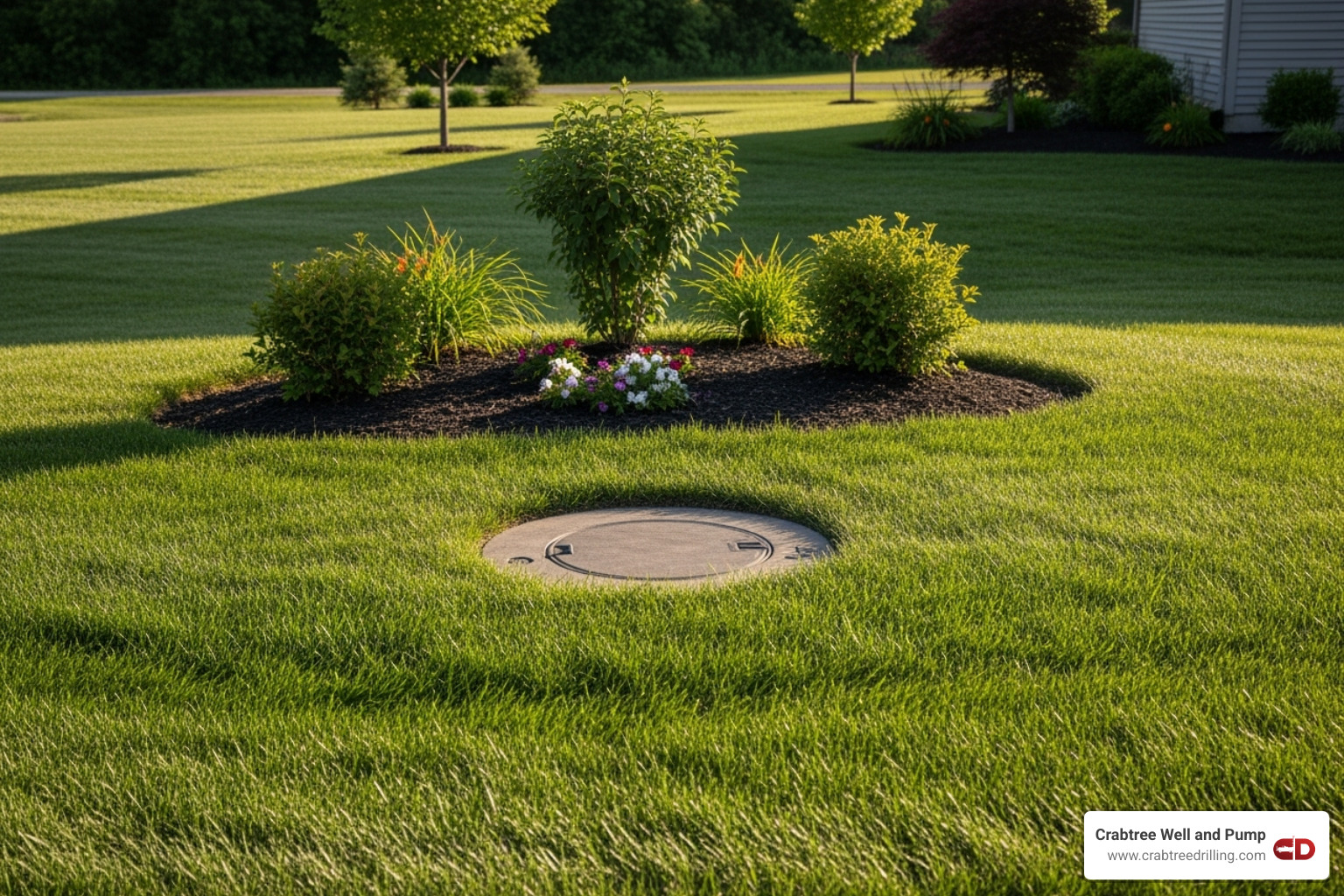
Residential well drilling offers complete independence from municipal water systems, giving you control over your family’s water quality. With a private well, you are free from city-wide water restrictions and have access to fresh, clean water straight from your own land. It’s a reliable source that can serve your family for decades.
At Crabtree Well and Pump, we’ve helped Ohio families tap into this natural resource since 1946. Our well drilling service transforms your property into a self-sufficient water source, providing the peace of mind that comes with long-term reliability and water quality control. We guide you through every step, whether you’re building a new home or replacing an old well. You can learn more about our approach to Water Well Drilling Ohio and find What to Expect from Residential Well Drilling During Home Construction.
The Complete Well Drilling Process
Creating your private water source involves several carefully orchestrated steps:
- Site evaluation: Our experts study your land’s geology, review maps, and use local experience to find the best water-bearing formations (aquifers).
- Well location selection: We consider your home’s layout, septic system, and property lines to find a spot that is both practical and provides excellent water.
- Drilling: Based on ground conditions, we use proven methods like rotary drilling (for soil and rock) or cable tool drilling (pounding through tough layers).
- Borehole creation and Casing installation: As we drill, we monitor soil and rock layers to find the optimal depth. We then insert a sturdy casing to line the borehole, preventing collapse and protecting your water from surface contaminants.
- Grouting and Well development: We seal the space around the casing with a watertight grout. Then, we flush the well to remove any sediment or debris from construction, ensuring your water flows clean from day one.
- Water testing: We test flow rates, pressure, and water quality to ensure everything meets safety standards.
For more detailed information, the National Ground Water Association offers excellent resources for homeowners.
Permits and Regulations for Your Well
Well permits protect your family’s health and local groundwater quality. Our team handles the entire regulatory process for you.
- Local and state permits ensure your well meets safety standards and follows proper construction methods.
- Setback requirements dictate safe distances from septic systems, property lines, and other potential contamination sources.
- As licensed contractors, our team at Crabtree ensures full ensuring compliance with all codes. We have over 75 years of experience navigating local regulations to get your project approved and completed safely. You can learn more about our commitment to quality on our About Us page.
#2: Commercial & Agricultural Well Drilling: Powering Your Business

For commercial facilities, manufacturing plants, and agricultural operations, a reliable water source is the foundation of success. A professional well drilling service provides independence from municipal systems, which can impose restrictions on large-volume users. A private well gives you control over your water supply and quality, ensuring a consistent resource for your operations.
With over 1.2 million agricultural wells across the country, it’s clear that smart farmers have figured out the value of having their own water source. Our team has provided commercial well drilling service solutions since 1946, and we know what it takes to keep your operation flowing. You can learn more about our approach to Commercial Well Drilling and find information on the benefits of commercial well drilling for forward-thinking business owners.
A Custom well drilling service for High-Demand Applications
Commercial and agricultural wells are engineered solutions designed for high water demands.
- Custom well design: We design each well based on your specific needs, whether for irrigating hundreds of acres or running a large manufacturing plant, ensuring the right water volume and pressure.
- Aquifer selection: Our geological expertise helps us identify high-volume aquifers that can sustain significant water extraction for decades.
- Large-diameter wells: High-demand applications often require larger wells to accommodate powerful pumps and allow for greater water flow without overwhelming the system.
Supporting farms and businesses with reliable water means better crop yields, healthier livestock, and the flexibility to expand. Many clients find their well water quality improves their operations. While the DIY spirit is admirable, commercial wells require specialized equipment and expertise. Our Irrigation Wells page has more information on why professional installation is a beneficial decision.
#3: Geothermal Drilling: Using the Earth’s Energy
Just a few feet below the ground, the earth maintains a steady temperature year-round. Geothermal drilling taps into this sustainable energy source to create eco-friendly heating and cooling systems that work with nature, not against it. Unlike traditional HVAC systems, geothermal simply transfers the earth’s natural, stable heat to keep your home or business comfortable.
Here’s how geothermal works: in winter, the system pulls warmth from the ground to heat your building. In summer, it reverses the process, moving heat from your building back into the cooler earth. This process can significantly reduce energy consumption for heating and cooling. We’ve been perfecting our geothermal well drilling service for years, and we love helping property owners find this technology. You can learn more at Geothermal Drilling, or dive deeper with our guide: What is Geothermal Drilling?.
The Geothermal Drilling Process
Installing a geothermal system requires precision and expertise. The process starts with careful planning and ends with a system that’ll keep you comfortable for decades.
- Vertical Boreholes: We drill deep vertical boreholes to access the zone where the earth’s temperature is constant.
- Loop Installation: We install durable polyethylene pipes (geothermal loops) that circulate a water-based solution to transfer heat between your building and the earth. These systems are built to last for 50 years or more.
- Grouting for thermal conductivity: We backfill the boreholes with a special thermal grout that maximizes heat transfer, improving the system’s efficiency.
- Connecting to your HVAC system: The underground loops connect to an indoor geothermal heat pump, which integrates with your existing ductwork for a quiet, efficient system.
Long-term energy efficiency is the key benefit. Geothermal systems work with the earth’s stability, dramatically reducing your environmental impact and energy usage. As a dedicated Geothermal Drilling Company, we’ve seen how this technology transforms properties. It’s a commitment to sustainable living that provides benefits every day.
#4: Well Pump & System Installation: The Heart of Your Well
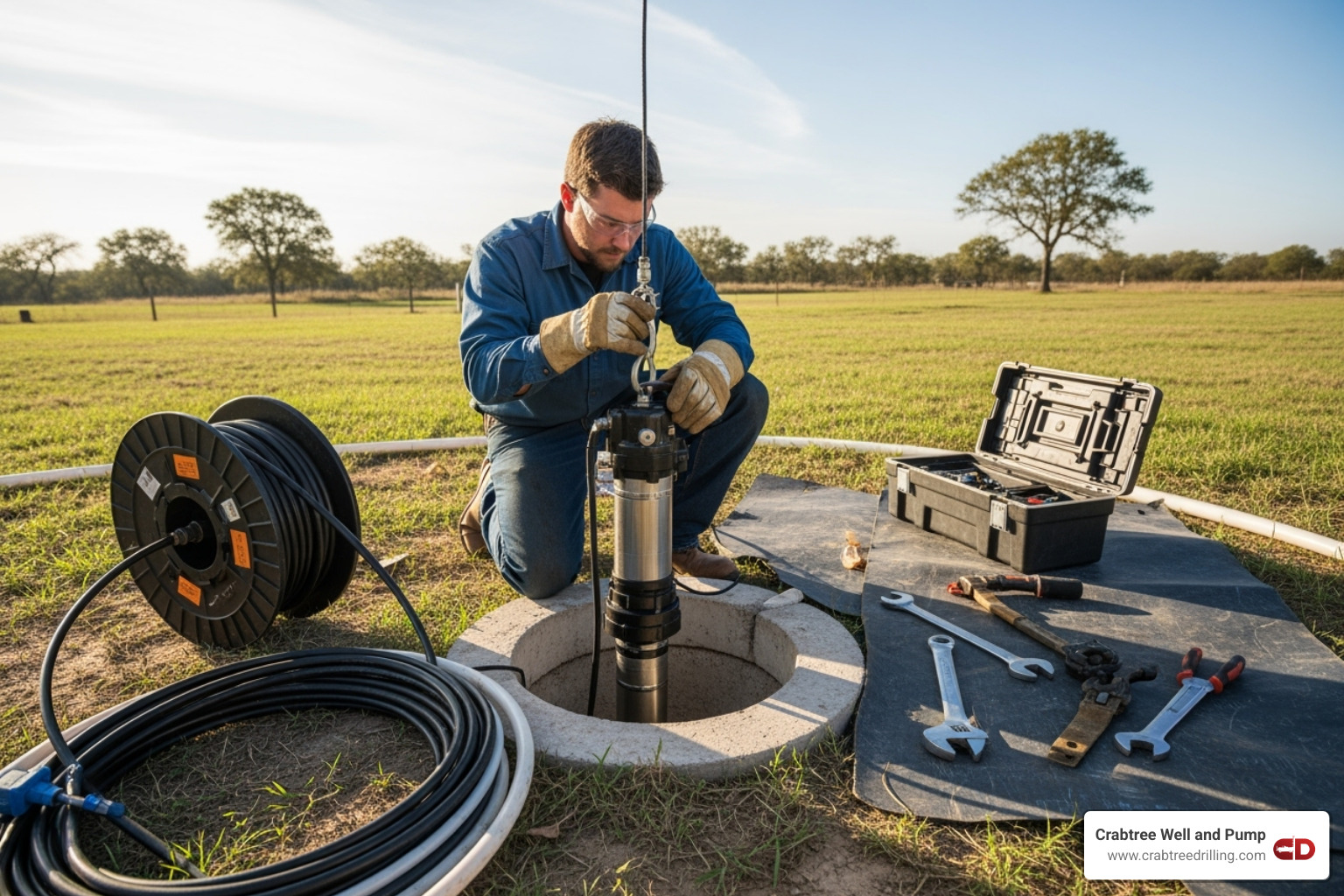
The well pump system is the heart of your well, changing it from a hole in the ground into a functional water supply. As part of our comprehensive well drilling service, we ensure the pump installation brings your well system to life, delivering fresh water on demand.
The right pump depends on your well’s depth and water usage. Submersible pumps, which sit underwater inside the well, are efficient and reliable for most wells deeper than 25 feet. For shallower wells, jet pumps are a great option, as they stay above ground for easier maintenance access.
For those tired of fluctuating water pressure, constant pressure systems automatically adjust their speed to maintain a steady flow, no matter how many faucets are running. Every system also includes a pressure tank to store pressurized water, reducing pump cycling and extending its lifespan. Our technicians handle all electrical connections to ensure your system works safely and efficiently.
You can explore the full range of our pump installation and maintenance services on our Services page.
Signs Your Well Pump Needs Repair or Replacement
Your well pump typically lasts 10 to 15 years, but it will eventually show signs of age. Watch for these hints that it’s time for professional attention.
- No water: The most obvious sign of pump failure. First, check for a tripped circuit breaker.
- Low water pressure: A struggling pump or waterlogged pressure tank can cause sputtering faucets or a weak shower.
- Pump runs constantly: This may indicate a leak, a faulty pressure switch, or a pump that’s overworked.
- Increased energy consumption: A pump working too hard will consume more electricity.
- Strange noises: Grinding, clicking, or banging sounds often point to mechanical problems.
- Cloudy or sandy water: A failing pump might stir up sediment, or a damaged casing could be allowing debris into your water.
If you notice these signs, contact a professional. Well pump work involves electricity and water—a combination best left to experienced technicians who can quickly diagnose the issue and get your water flowing again.
#5: Well Maintenance & Repair: Ensuring Long-Term Reliability
Your well works day and night to deliver clean water. Like any hardworking system, it needs regular attention to perform at its best. Proper care can ensure your well serves you for decades. Our comprehensive well drilling service doesn’t end when the drilling stops—we’re here to support your well throughout its entire lifespan.
- Well rehabilitation uses mechanical and chemical treatments to restore flow and efficiency in an aging well affected by mineral buildup or sediment.
- Well cleaning removes natural accumulations of sediment and mineral deposits that can clog your well screen and overwork your pump.
- Well inspection is a health checkup for your water system, where our professionals examine every component to catch potential issues early.
When Should a Homeowner Consider Replacing an Existing Well?
While no one wants to replace a well, sometimes it’s the smartest long-term decision. Consider replacement for:
- Age and deterioration: Older wells built with outdated materials may not meet current safety standards and can be prone to failure.
- Persistent low yield: If your well consistently struggles to meet your water needs, even after rehabilitation, the aquifer may be depleted.
- Contamination issues: If water tests repeatedly show harmful substances that cannot be treated, a new well in a cleaner location is the safest option.
- Major structural damage: If the well casing is too damaged to repair effectively, a new well is often the better long-term solution.
For helpful resources on well ownership and maintenance decisions, we recommend checking out WellOwner.org.
The Importance of a Routine well drilling service
Routine well maintenance is crucial, as prevention is always better than repair. Annual professional inspections are your first line of defense. During a visit, we examine the pump, pressure tank, electrical connections, and well cap.
Water quality testing for bacteria and nitrates should be done annually to ensure your water is safe. Also, keeping your well cap secure and the wellhead area clear of debris prevents contamination and makes servicing easier.
By investing in routine maintenance, you extend your system’s lifespan and protect your family’s health. We share more tips on our Blog.
Frequently Asked Questions about Well Drilling
How do ground conditions affect the well drilling process?
Ground conditions are a primary factor in any well drilling service. The type of soil, clay, sand, gravel, and bedrock on your property determines the drilling method, equipment, and project timeline. Hard bedrock requires slower, more powerful techniques, while loose soil or gravel needs special care to prevent the borehole from collapsing. Our team conducts geological assessments to select the most efficient strategy, like our preferred dual rotary drilling method, which is ideal for the varied conditions in Ohio.
What is the role of the well casing and development?
The well casing is a durable pipe (steel or PVC) that lines the borehole. It provides structural integrity to prevent collapse and acts as a barrier to seal out surface contaminants, ensuring your water comes from a clean, deep aquifer. Well development is the process of cleaning the well after drilling. As part of our well drilling service, we use techniques like air or water jetting to remove sediment and drilling debris. This critical step optimizes water yield, ensures clear water, and prepares the well for pump installation.
How long does a well pump typically last?
Depending on factors like water quality, usage, and initial quality, a well pump typically lasts 10 to 15 years. Both submersible pumps and jet pumps have similar lifespans. Regular professional inspections are key to extending the pump’s operational life. An annual checkup can identify early warning signs, allowing for timely adjustments that prevent premature failure and extensive repairs. Regular maintenance is the best way to protect your well system and avoid the inconvenience of being without water.
Your Partner for a Reliable Water Source
Choosing the right well drilling service can make all the difference between decades of worry-free water and years of frustrating problems. It’s not just about digging a hole in the ground—it’s about creating a complete water system that will serve your family or business reliably for generations.
From that very first site evaluation to the final pump installation and ongoing maintenance, every step matters. The geological assessment determines where your well should go. The drilling method affects how straight and stable your well will be. The casing installation protects your water quality. Even the grouting process impacts your long-term water safety.
That’s why partnering with experienced professionals isn’t just smart—it’s essential. You need a team that understands local geology, steers permits effortlessly, and stands behind their work for the long haul.
For over 75 years, Crabtree Drilling has been that trusted partner for families and businesses throughout Springfield, Ohio, and the surrounding communities. We’re not just another drilling company—we’re your neighbors. As a family-owned and operated business, we’ve built our reputation one well at a time, treating every project like it’s for our own family.
Our decades of experience mean we’ve seen every type of ground condition, solved countless water challenges, and helped thousands of property owners achieve water independence. We know the local aquifers, understand regional regulations, and have the expertise to handle everything from simple residential wells to complex commercial systems.
Whether you’re building your dream home, expanding your farm operation, or exploring geothermal energy, our team brings unwavering quality and genuine care to every project. We’re here to guide you through the entire process, answer your questions, and ensure you get the reliable water source you deserve.
Ready to find what a private well can do for your property? Contact Us today to learn more about our professional Well Drilling services. Let’s start a conversation about your water future.