
Why Water Sample Testing Matters for Every Well Owner
A water sample test is a laboratory analysis that identifies contaminants, minerals, and bacteria in your water supply to ensure it’s safe for drinking and daily use. Most homeowners should test well water frequently for bacterial contamination and periodically for chemical contaminants and general water quality.
Quick Answer: What You Need to Know About Water Sample Testing
- Microbial Testing: Test frequently for E. coli and total coliforms.
- Chemical Testing: Test based on local recommendations (arsenic, lead, nitrates, pesticides).
- General Quality: Test periodically for pH, hardness, iron, and total dissolved solids.
- Sample Collection: Use lab-provided bottles and follow strict handling instructions.
- Turnaround Time: Typically a few business days for results.
As a private well owner, you are responsible for monitoring and maintaining your water quality. The challenge is that many contaminants won’t affect the smell, taste, or color of your drinking water. Even if your water seems perfectly fine, you can’t know for sure without testing.
The stakes are real. Consuming water with contaminants above acceptable limits can affect your health—especially for vulnerable populations like seniors, infants, pregnant individuals, and anyone with a compromised immune system.
Beyond health concerns, untested water can damage your home. Hard water causes scaling in pipes and appliances, while iron creates stubborn stains on fixtures and laundry. These issues don’t just affect your water quality—they can lead to reduced appliance efficiency and plumbing problems.
Testing gives you peace of mind and actionable information. When you know what’s in your water, you can make informed decisions about treatment options that protect your family and your home.
Why, When, and What to Test For
Why Testing Your Water is Non-Negotiable
Your water can look clear, taste fine, and still harbor invisible threats. Many dangerous substances like bacteria, heavy metals, or chemicals are completely undetectable by sight, smell, or taste.
The health risks are serious, especially for vulnerable individuals. Infants can develop “blue baby syndrome” from nitrates, while pregnant individuals, the elderly, and those with weakened immune systems face heightened risks from even low levels of contaminants.
Beyond health, your water quality directly impacts your home. Hard water creates stubborn scaling in pipes and appliances, reducing efficiency and shortening their lifespan. Iron, a common issue in our area, causes orange-brown stains on laundry and fixtures, gives water a metallic taste, and can clog pipes. Some contaminants can even be absorbed through the skin during bathing.
The U.S. Environmental Protection Agency strongly recommends regular well water testing. Think of a water sample test as proactive management of your most vital resource. Knowing what’s in your water allows you to make informed decisions that protect your family’s health and preserve your home’s plumbing. You can protect your home’s water with regular testing by following their guidelines.
When and How Often Should You Test?
A regular testing schedule is key, but some situations require immediate attention.
- Microbial Contamination: Test for E. coli and total coliform bacteria frequently. These tests are quick and essential for well owners.
- General Water Quality: Test for pH, hardness, and iron periodically to monitor your water’s taste, appearance, and impact on plumbing.
- Chemical Contaminants: Test for lead, arsenic, and nitrates based on local public health recommendations for the Springfield area. If you’re unsure about your well’s condition, you can learn more about well services we offer.
Test immediately under these circumstances:
- After floods or heavy rain
- Following changes in nearby land use (construction, agriculture)
- After any well repairs or maintenance
- If you notice any change in your water’s taste, smell, or color
- If your well is shallow, old, or otherwise vulnerable to contamination
Regular testing helps track changes over time and catch problems before they become serious.
Key Contaminants to Look For
A water sample test looks for substances in three main categories.
Microbial contaminants are living organisms that can make you sick.
- E. coli: Its presence indicates recent fecal contamination, making water unsafe to drink.
- Total Coliforms: These bacteria signal a potential pathway for contamination into your well.
- Viruses and Protozoa: While not tested directly in routine checks, E. coli and coliforms are warning signs that these pathogens might be present.
Chemical contaminants can occur naturally or from human activity and pose long-term health risks.
- Heavy Metals: Lead from old plumbing can cause developmental issues in children. Naturally occurring arsenic is linked to cancer. Copper and manganese can cause stomach upset and neurological effects.
- Nitrates and Nitrites: Primarily from agricultural runoff and septic systems, they are especially dangerous for infants, causing “blue baby syndrome.”
- Pesticides and Uranium: Agricultural chemicals and naturally occurring radioactive elements can leach into groundwater, creating various health risks.
- Volatile Organic Compounds (VOCs): Originating from fuel spills or industrial discharge, these can be absorbed through the skin.
General water quality parameters affect how your water looks, tastes, and interacts with your home.
- pH: Measures acidity or alkalinity. Imbalanced pH can corrode pipes.
- Hardness: Caused by calcium and magnesium, it leads to limescale buildup and reduces appliance efficiency.
- Iron: Creates reddish-brown stains and a metallic taste.
- Total Dissolved Solids (TDS): High levels can affect taste and indicate the presence of other contaminants.
Understanding these contaminants helps tailor the right testing approach and find effective solutions.
Your Step-by-Step Guide to a Water Sample Test

Getting a water sample test is a straightforward and essential health checkup for your water.
DIY vs. Professional Testing
You have two main options: DIY kits or professional lab testing.
DIY options like test strips, digital meters, and mail-in lab kits are convenient for quick checks of basic parameters like pH or hardness. They can be a good first step to alert you to obvious issues. However, home kits have limitations. They often lack the precision for making critical safety decisions and may miss serious threats like specific bacteria or heavy metals.
For comprehensive, accurate results, professional testing through an accredited laboratory is the best choice. These labs use sophisticated equipment to detect even trace amounts of contaminants. In Ohio, you can find a certified lab through the Ohio Department of Health. We strongly recommend professional testing for health-critical contaminants like E. coli, lead, or arsenic, or if you have vulnerable family members.
The Water Sample Collection Process
A properly collected sample is crucial for accurate results.
- Use the Correct Bottle: Only use the sterile, lab-provided sample bottle, which may contain preservatives.
- Read the Instructions: Follow the lab’s specific guidance, as different tests have different requirements.
- Choose and Clean the Tap: Select a frequently used cold-water faucet without a filter. Remove any aerators and wipe the spout with an alcohol swab.
- Flush the System: Run the water at full flow for several minutes to ensure you’re sampling water directly from the well.
- Fill the Bottle: Without touching the inside of the bottle or cap, fill it to the marked line. Avoid contact between the bottle and the faucet.
- Label and Store: Cap the bottle tightly, label it with the required information, and keep it cool in an insulated container with ice packs until delivery. Do not freeze the sample.
- Deliver Promptly: Most samples, especially for bacterial testing, must reach the lab within a day or two. The sooner you submit it, the more accurate the results.
Choosing the Right Water Sample Test Kit
Select a water sample test kit based on your specific concerns and water source.
- Specific Concerns: A metallic taste might point to iron, while orange stains are a classic sign of iron contamination. Your concerns should guide your choice.
- Water Source: City water and well water face different challenges. Kits are often designed as “City Water” or “Well Water” profiles to focus on the most common issues for each.
- Test Types: Basic kits cover fundamentals like pH and hardness for routine monitoring. Comprehensive panels analyze many contaminants and are great for establishing a baseline. Bacteria-only tests are a non-negotiable routine check for well owners, focusing on E. coli and total coliforms. Heavy metal tests are essential for older homes or properties near industrial areas.
When in doubt, a comprehensive mail-in lab test provides a thorough baseline. Our team has the local expertise to help you interpret results and find the right solutions. For professional support, check out our water well services.
Understanding Your Water Test Results and Taking Action

Getting your water sample test results back is the first step. Here’s how to make sense of them and take action.
How to Interpret Your Water Sample Test Results
Your report will list tested contaminants, your water’s results, and the Maximum Contaminant Level (MCL), which is the safe limit.
- Units of Measurement: You’ll see terms like ppm (parts per million) or ppb (parts per billion). For bacteria, results are often “Present/Absent” or “Colonies per 100 mL.”
- Compare to Guidelines: Compare your results to established benchmarks, like those from the EPA or Guidelines for Canadian Drinking Water Quality.
- Bacterial Results: Any presence of E. coli is a serious red flag indicating fecal contamination; the water is unsafe to drink. A positive total coliform result means a contamination pathway exists, even if the bacteria themselves aren’t always harmful. The acceptable level for both is an absence of bacteria.
If your results exceed recommended limits, take it seriously. Your local public health unit can help you understand the implications.
Recommended Actions for Contaminated Water
If your water sample test finds contamination, act quickly.
For Microbial Contamination (E. coli or total coliforms):
- Immediate Action: Stop using your tap water for drinking or cooking. Switch to boiled (a full rolling boil) or bottled water immediately.
- Disinfection: The next step is typically shock chlorination, a process of disinfecting your entire well system. It’s best handled by a qualified professional to ensure it’s done safely and effectively.
- Retesting: After treatment, you must retest your water to confirm the problem is solved. Do not resume normal water use until a new lab test comes back clean.
- Find the Source: Disinfection treats the symptom. A professional should inspect your well for the contamination source, such as a faulty well cap or cracked casing, to prevent recurrence.
For Chemical Contaminants (lead, arsenic, nitrates):
Boiling does not remove chemicals and can actually concentrate them. Use bottled water until a treatment system is in place. Your local public health unit can offer guidance, and a professional can recommend and install the right filtration system for your specific needs. Always retest after installation to verify the system is working.
From Testing to Treatment: Improving Your Water Quality
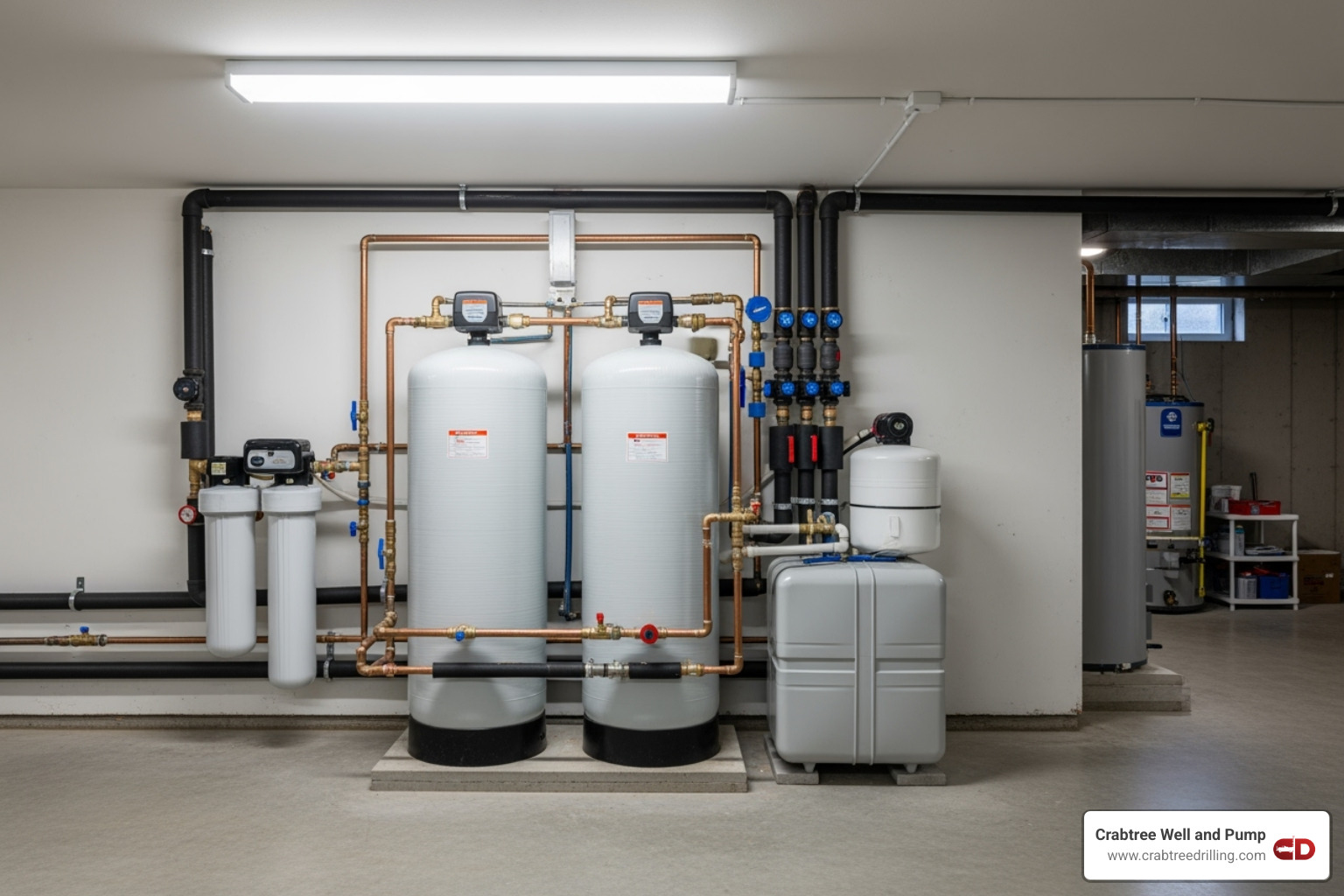
Once you know what’s in your water, you can fix it. For decades, we’ve helped families in the Springfield area solve their water quality challenges.
- Water Softeners: These systems combat hard water (high calcium and magnesium) by using ion exchange, preventing scale buildup and improving appliance longevity.
- Iron Filters: An iron filter solves frustrating orange-brown stains and metallic taste by oxidizing and filtering out iron particles.
- Reverse Osmosis (RO) Systems: Installed at your sink, RO systems use a membrane to remove a wide array of impurities, providing exceptionally clean drinking water.
- UV Purification Systems: For recurring bacterial issues, a UV system provides continuous, chemical-free disinfection by using ultraviolet light to inactivate microorganisms.
Proper installation and maintenance are key. We tailor our recommendations to your specific water sample test results. Explore our Water Conditioning Systems to learn more.
Frequently Asked Questions about Water Testing
Can I test my water myself, or do I need a professional?
DIY water sample test kits are a great starting point for checking basic parameters like pH or hardness. However, they have limitations in accuracy and scope. For serious health concerns like bacteria (E. coli), heavy metals (lead, arsenic), or if you have vulnerable individuals at home, professional testing through an accredited lab is essential. You can’t see, taste, or smell many of the most dangerous contaminants, which is why professional analysis provides the only true peace of mind.
How long does it take to get water test results?
Turnaround times are typically quick. For routine bacterial tests, you can often expect results within a few business days after the lab receives your sample. The clock starts when you collect the sample, and since microbial samples are time-sensitive (requiring testing within a day or two), prompt delivery to the lab is crucial. Comprehensive chemical tests might take slightly longer.
What are the differences between testing for microbial and chemical contaminants?
These are two different types of tests that look for different things.
- Microbial testing looks for living organisms like E. coli and total coliforms. These are indicators of fecal contamination and pose an immediate, acute health risk (e.g., gastrointestinal illness). These contaminants are invisible and require a sterile, time-sensitive sample collection process.
- Chemical testing identifies non-living substances like heavy metals (lead, arsenic), nitrates, and minerals that cause hardness. These typically pose long-term health risks from prolonged exposure. While some, like iron, cause noticeable stains, many of the most dangerous chemicals are also invisible, odorless, and tasteless.
A test for bacteria will not detect chemicals, and vice versa. A comprehensive assessment of your water quality often requires both.
Conclusion
Your water is too important to leave to chance. A water sample test is the first step in protecting your family’s health, preserving your home’s plumbing, and gaining peace of mind. It transforms uncertainty into actionable knowledge.
While water quality issues can feel overwhelming, you don’t have to handle them alone. At Crabtree Well and Pump, we’ve been serving Springfield, Ohio, and surrounding communities with unwavering quality for decades. Our decades of local expertise mean we’ve seen every water challenge imaginable and know how to solve it.
From interpreting your test results to installing the right treatment system, our team is here to guide you. The path to clean, safe water starts with a test and continues with expert support.
Ready to take control of your water? Learn more about our water conditioning services and find how we can help you achieve the clean, safe water your family deserves.