
Understanding What’s Really in Your Well Water
Public health water testing is the process of analyzing your private drinking water for bacterial contamination (like E. coli and total coliforms) and other harmful substances to ensure it’s safe to drink. Here’s a quick overview:
- What it tests for: Primarily indicator bacteria (E. coli, total coliforms) and nitrates.
- Why it matters: These signal potential contamination from waste, which can carry disease-causing organisms.
- Where to get tested: Local health departments provide bacterial testing, while private labs test for other contaminants.
- How often: Annually, or more often after floods, well repairs, or if you notice changes in your water.
- What happens next: If contamination is found, you must stop using the water, find the source, disinfect your well, and retest.
If you own a private well, you are responsible for your water’s safety. Unlike municipal water systems, private wells have no oversight, and water quality can change over time. The reality is that your water can look, smell, and taste fine while harboring invisible dangers like E. coli and nitrates. These can be accompanied by pathogens like Salmonella and Giardia. For infants, high nitrate levels can cause a dangerous condition called methemoglobinemia, or “blue-baby syndrome.”
This guide walks you through the entire public health water testing process-from understanding why it matters to collecting a sample, interpreting results, and taking action.
Why Your Private Well Needs Regular Water Testing
As a private well owner, you are the guardian of your family’s drinking water. There’s no treatment plant monitoring your supply, which is why public health water testing is essential to ensure the water from your tap is safe.
Your well draws from groundwater that can pick up contaminants from sources like failing septic systems or agricultural runoff. The unsettling truth is that contaminated water rarely announces itself; it can look, smell, and taste normal while harboring invisible dangers.
The U.S. Environmental Protection Agency (EPA) recommends testing your well water at least once a year for bacteria and nitrates. This isn’t about paranoia-it’s about being proactive. Regular testing catches problems early, before anyone gets sick.
The Role of Indicator Bacteria
Why test for indicator bacteria like total coliforms and E. coli instead of every possible pathogen? It’s a matter of practicality. Testing for hundreds of potential pathogens would be impractical and slow. Instead, experts use indicator bacteria as an early warning system.
- Total coliforms are found in soil, on plants, and in animal waste. Their presence suggests that surface water is getting into your well, creating a pathway for other contaminants.
- E. coli is a more serious indicator, as it lives exclusively in the intestines of humans and warm-blooded animals. Its presence is definitive evidence of fecal contamination. Where E. coli is found, dangerous pathogens like Salmonella, Giardia, and Campylobacter may also be present.
Testing for indicator bacteria is an efficient way to know if your well’s protective barriers are working. It’s like a smoke detector for your water supply.
Potential Health Risks from Untested Water
Drinking contaminated water most commonly leads to gastrointestinal illness, with symptoms like stomach cramps, diarrhea, and nausea. For healthy adults, this might mean a few miserable days. But for vulnerable individuals, the dangers are much more serious.
- Infants under six months are especially susceptible to nitrates. At levels above 10 mg/L, nitrates can cause methemoglobinemia, or “blue-baby syndrome,” a life-threatening condition that prevents blood from carrying oxygen.
- Pregnant women, the elderly, and anyone with a compromised immune system face heightened risks from waterborne pathogens that might only cause mild symptoms in others.
Some contaminants can also cause long-term health effects with repeated exposure. You won’t know what’s in your water unless you test it. Public health water testing is the only way to know for certain.
A How-To Guide for Public Health Water Testing
Getting your well water tested is a straightforward process designed to be accessible for all private well owners. Many local health departments offer bacterial testing and provide clear guidance.
Let’s walk through how to test your water, from getting your kit to submitting your sample.
Step 1: Obtaining a Water Test Kit
Your first stop is your local health department, such as the Clark County Combined Health District for residents in our area. They can provide a water sampling kit and answer questions.
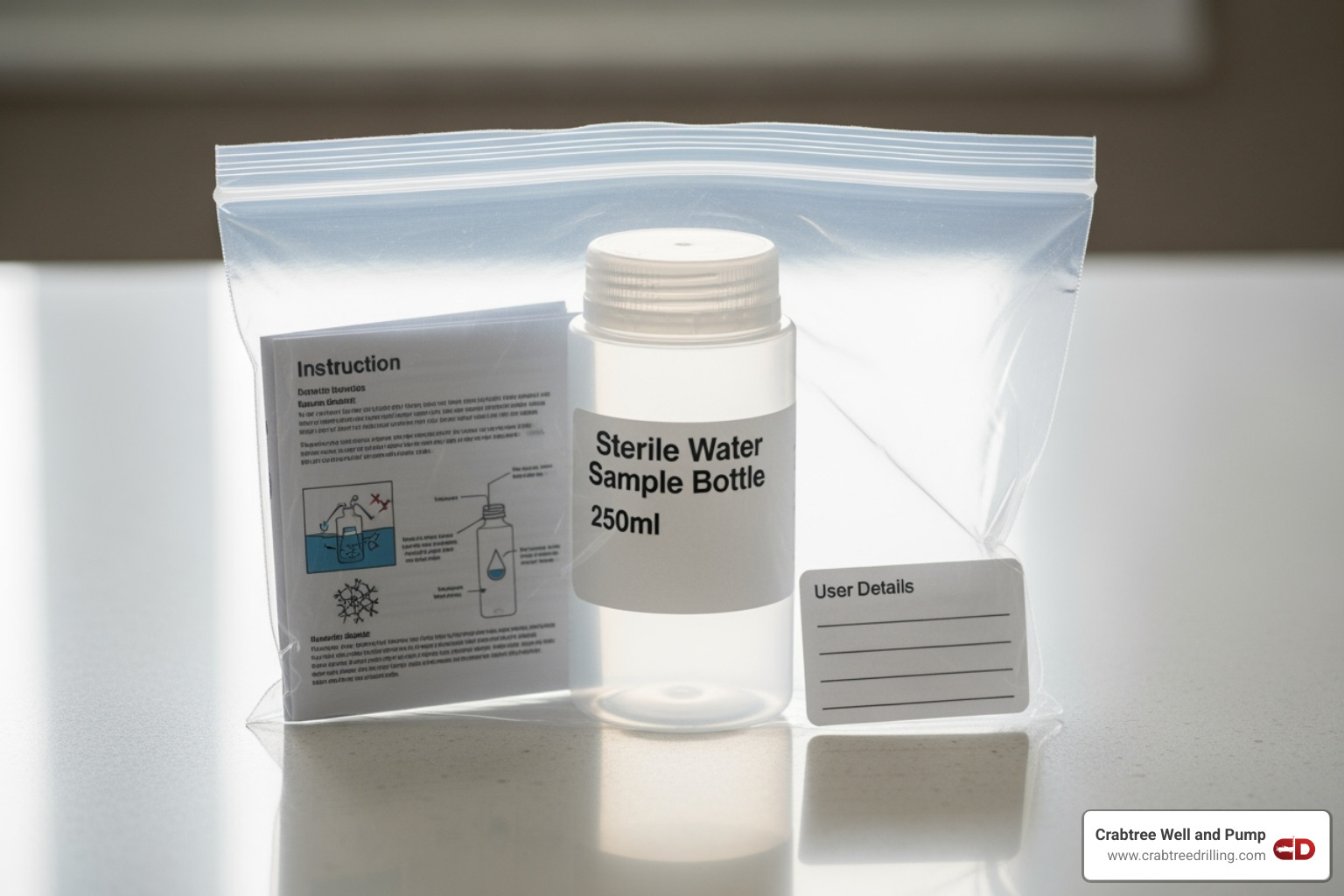
The kit typically includes a sterile bottle, a requisition form, and instructions. It’s important to know that public health labs usually test for bacterial indicators like E. coli and total coliforms. If you want to test for other contaminants like nitrates, heavy metals, or chemicals, you’ll need to work with a state-certified private laboratory.
Step 2: Collecting Your Water Sample Correctly
Attention to detail is critical here to avoid a contaminated sample and false results. Follow these steps for an accurate test.
- Prepare: Wash your hands thoroughly. Choose an indoor, cold-water faucet that is not connected to a water softener or filter. Remove any aerator or screen.
- Disinfect: Wipe the end of the faucet with an alcohol wipe or a diluted bleach solution. Turn on the cold water and let it run at full force for 2-3 minutes to flush the pipes.
- Collect: Open the sterile bottle carefully, without touching the inside of the bottle or cap. Do not rinse it. Fill the bottle to the marked line and cap it tightly.
- Document: Complete the requisition form, including the exact date and time of collection. Place the bottle in a cooler with ice packs to keep it cool (between 2-8 degrees C).
Timing is everything. Water samples must reach the lab for testing within 48 hours of collection to ensure sample integrity. Plan to collect your sample just before you drop it off.
Step 3: Submitting Your Sample for Analysis
With your sample collected and chilled, it’s time to get it to the lab. Health departments have designated drop-off locations and hours, often Monday through Thursday. Many labs do not accept samples on Fridays or before holidays because of the 48-hour processing window.
Plan your collection day to avoid weekends and holidays. Keep the sample in a cooler during transport. The lab will process your sample and typically provide results within a few business days, often through an online portal.
Following these steps for your public health water testing will give you reliable results and peace of mind about what’s in your well water.
Decoding Your Water Test Results
When your results arrive, they might seem confusing. Don’t worry-understanding the terms is simpler than it looks and is essential for protecting your family’s health. If you’re ever unsure, public health inspectors can help you interpret your report and explain what actions to take.
Understanding Common Public Health Water Testing Results
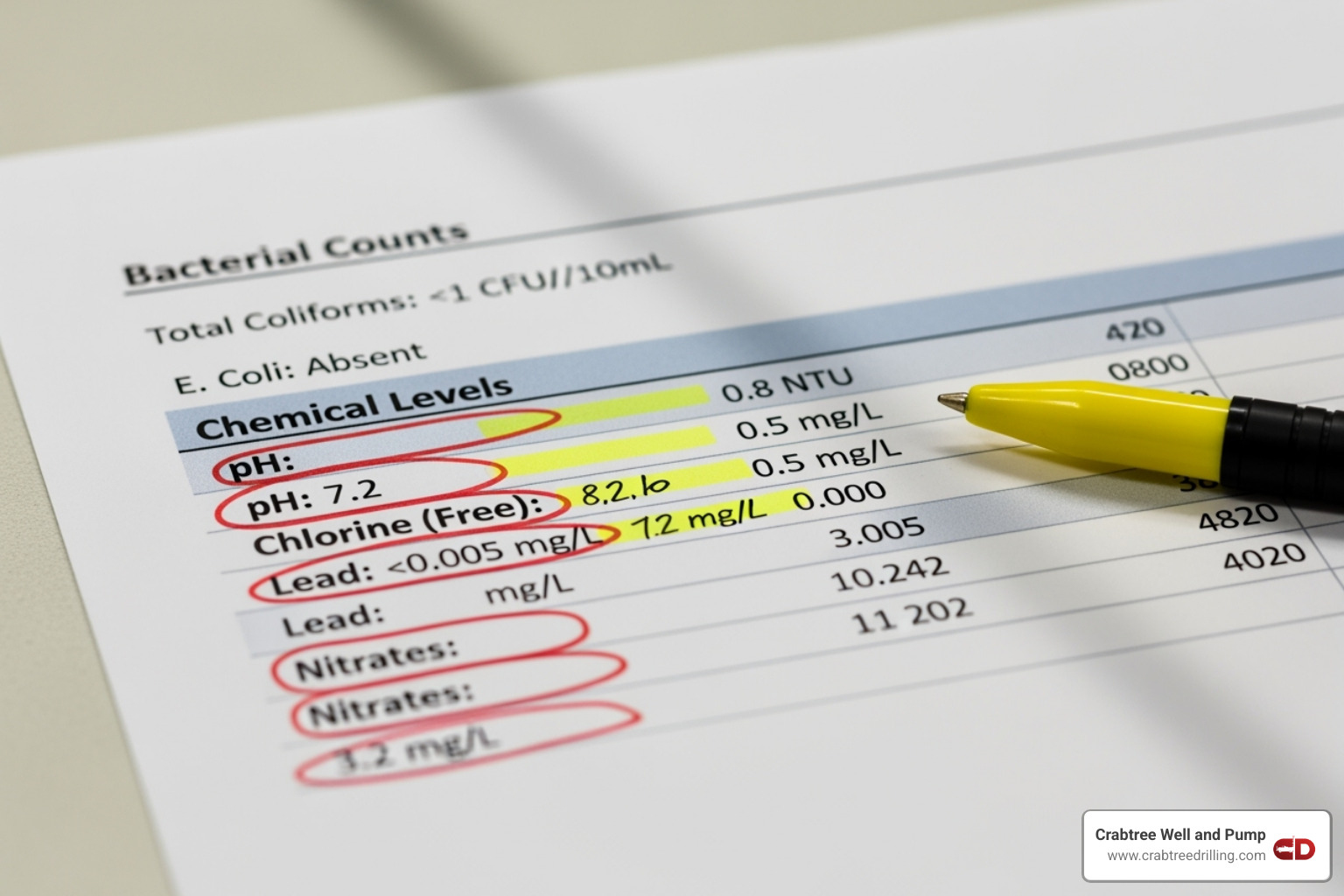
Your public health water testing results will typically focus on two main indicators: total coliforms and E. coli.
-
Total Coliforms: These bacteria indicate the general quality of your water. A result of “No significant evidence of bacterial contamination” (fewer than 5 coliforms per 100 mL) means your water is in the safe zone. If your results show “Significant evidence of bacterial contamination” (more than 5 coliforms per 100 mL), it suggests surface water may be entering your well. This is a warning sign that a contamination pathway exists.
-
E. coli: This is more serious. If your report shows any E. coli present or states “UNSAFE TO DRINK,” your water is unsafe for consumption without treatment. E. coli comes from animal or human waste, and its presence means that pathway is active. Where E. coli is found, other dangerous organisms could also be lurking.
-
Nitrate Levels: The safe limit for nitrates in drinking water is 10 mg/L. Above this level, the water poses a serious risk to infants under six months, potentially causing methemoglobinemia (“blue-baby syndrome”). Pregnant women should also avoid water with high nitrate levels. Nitrates often come from agricultural runoff or failing septic systems.
If your lab result indicates your water is unsafe, disinfecting your well is a critical safety measure.
When to Test for Other Contaminants
Bacterial testing doesn’t tell the whole story. Your well can be affected by other contaminants that this testing won’t catch.
Heavy metals like lead and arsenic, and chemical contaminants like pesticides and industrial solvents, can leach into groundwater. You should consider testing for these if you notice changes in your water’s taste, smell, or appearance, or if you live near agricultural land, industrial sites, or gas stations.
For this comprehensive testing, you’ll need to contact a private, state-certified laboratory. Your local health department can usually provide a list of accredited labs. If broader contamination issues are found, you may need to explore treatment solutions beyond simple disinfection. Our water conditioning systems can address many of these concerns through filtration and specialized treatment methods.
My Water Is Contaminated: What Are the Next Steps?
Finding out your public health water testing results show contamination can be overwhelming, but it’s a solvable problem. The key is to act quickly and methodically to protect your family.
Immediate Safety Measures
The moment you learn your water is contaminated, stop using it for consumption. This means no drinking, cooking, washing produce, brushing teeth, or mixing baby formula. Even if it looks and tastes fine, invisible contaminants can be present.
Switch to bottled water immediately. If that’s not an option, you can boil your water to kill most pathogens. Bring it to a full, rolling boil for at least one minute, then let it cool before storing it in clean, covered containers.
While securing safe water, do a quick visual inspection of your wellhead. A damaged well cap, pooled water around the casing, or a nearby septic issue can provide clues about the source of contamination.
Finding the Source and Fixing the Problem
Once your family is safe, it’s time to find and fix the underlying problem. Contamination means one of your well’s protective barriers has failed.
Start by inspecting your well’s physical components. Check that the well cap is tight and undamaged. The casing should extend at least 16 inches above ground and be free of cracks. The ground should slope away from the well to direct surface water away. Also, survey the area for potential contamination sources like septic systems or livestock.
For bacterial contamination, well disinfection through shock chlorination is the typical next step. This process uses a strong chlorine solution to kill bacteria throughout your well and plumbing. The procedure involves mixing household bleach with water, pouring it into the well, and running taps until you smell chlorine. The system then sits for at least 12 hours before being thoroughly flushed.
Shock chlorination can be tricky. If you’re not confident, it’s wise to call a professional. After disinfection, wait at least 48 hours before retesting. You’ll need two consecutive safe test results, spaced one to three weeks apart, to confirm the problem is solved.
If your water continues to test positive, or if you’re dealing with nitrates or chemicals that chlorination can’t fix, it’s time for expert help. Licensed well contractors can diagnose structural problems or install appropriate treatment systems. If you suspect a pump issue, knowing Who Do You Call for Service on a Well Pump? A Homeowner’s Guide is helpful. At Crabtree Well and Pump, we help homeowners resolve contamination issues, from simple fixes to complete system overhauls, to get your water safe and reliable again.
Proactive Well Maintenance and Testing Schedule
Treat your well like your car-regular maintenance prevents breakdowns and keeps it running smoothly. The same principle applies to public health water testing and well care. A little attention now can prevent major headaches and health risks later.
Recommended Testing Frequency
The baseline recommendation is to test at least once a year for coliform bacteria and nitrates. This annual check-up provides a snapshot of your water’s health.
However, some situations call for more frequent testing:
- Seasonally: Spring is a critical time to test due to melting snow and heavy rains. Many experts recommend testing three times a year.
- After Well Work: Test after any repairs or maintenance on your well or plumbing system.
- After Weather Events: Test after floods, severe storms, or rapid snowmelt.
- If You Notice Changes: Immediately test if your water’s appearance, taste, or smell changes.
- For Vulnerable Family Members: Test more often for nitrates if someone in your household is pregnant or you have an infant under six months.
Protecting Your Well from Contamination
Testing tells you if there’s a problem, but proper well maintenance prevents problems from starting. Your well’s physical structure is your first line of defense.
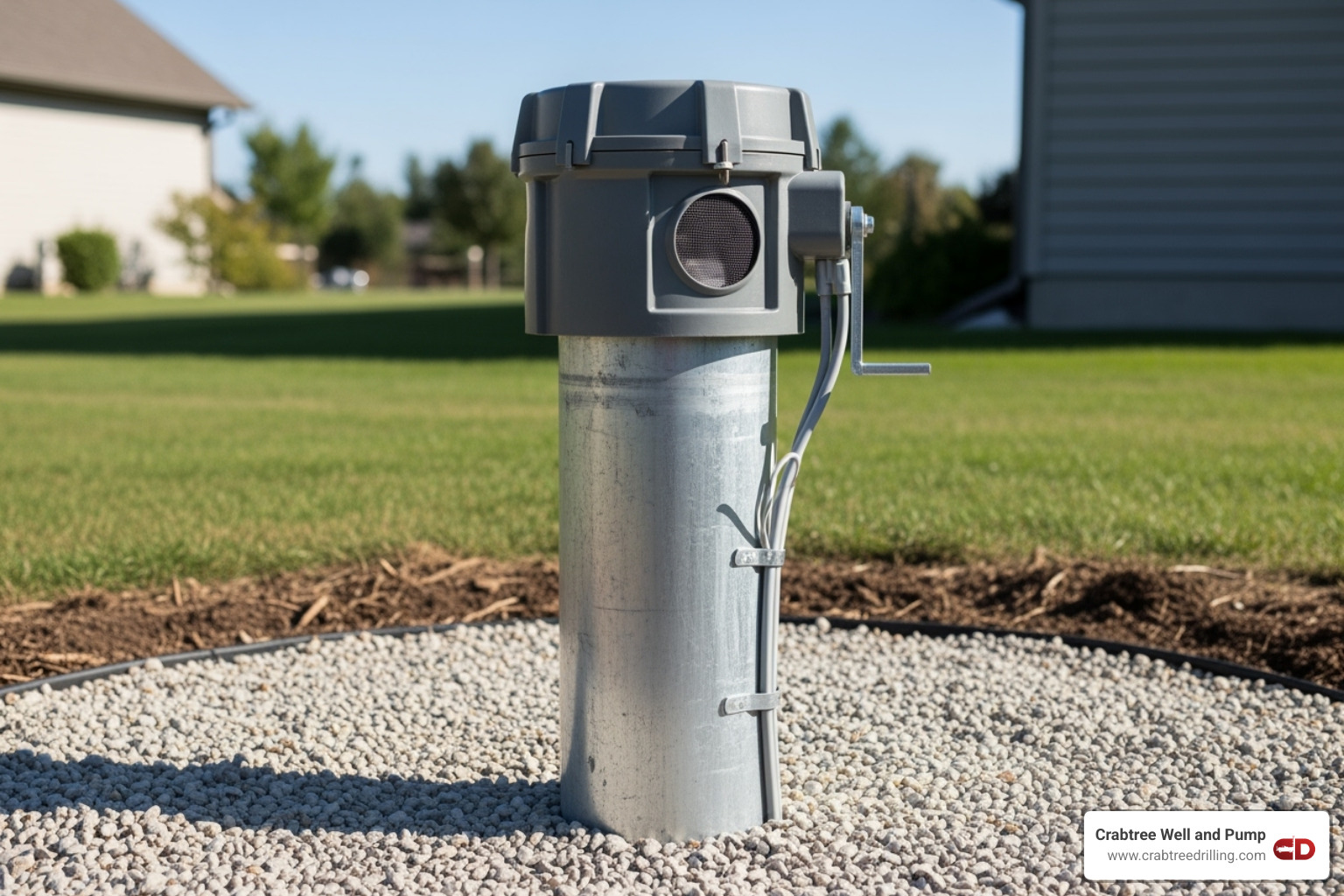
- Proper Construction: A well casing should extend at least 16 inches above ground and be free of cracks. All connections must be sealed.
- Secure Well Cap: The cap must fit tightly to keep out debris, insects, and surface water.
- Mounded Soil: The ground should slope away from the well to direct runoff away from the casing.
- Screened Vents: Vent openings should face downward and be screened to keep debris out.
- Safe Distances: Keep your well away from septic systems, livestock, and chemical storage areas. A failing septic system is a common source of well contamination.
- No Chemicals Nearby: Never mix or store chemicals like pesticides or fuel near your well.
In Ohio, water wells must meet specific construction standards outlined in the Ohio regulations for water wells. These rules are designed to keep wells safe. Following these practices and keeping up with regular public health water testing protects your family’s health.
Frequently Asked Questions about Public Health Water Testing
Navigating public health water testing can raise many questions. Here are answers to what we hear most often from well owners in Springfield, Ohio, and surrounding areas.
How often should I test my private well water?
At a minimum, test your well annually for bacteria (E. coli and total coliforms) and nitrates. This is your water’s annual checkup.
However, you should test more frequently-such as in the spring when runoff is high, after severe storms, or after any well system repairs. Also, test immediately if you notice changes in your water’s taste, smell, or appearance. If someone in your home is pregnant or an infant, more frequent nitrate testing is recommended.
What’s the difference between a public health lab and a private lab?
The main difference is scope. Public health laboratories focus on community health and typically test for key indicators like coliform bacteria and nitrates. This basic safety screening is often provided by state or local health departments.
Private laboratories are commercial facilities that can analyze water for a much wider range of contaminants, including heavy metals (lead, arsenic), pesticides, and industrial chemicals. This comprehensive testing is valuable if you have specific concerns beyond basic bacterial contamination.
Can I fix a contaminated well myself?
Some homeowners perform shock chlorination-disinfecting the well with chlorine-themselves. It can be effective for simple bacterial contamination if you follow instructions carefully.
However, shock chlorination only treats the symptom, not the cause. If your well cap is damaged or the casing is cracked, the contamination will likely return. For persistent contamination or if you’re unsure of the source, calling a professional is the safest choice. Our team at Crabtree Well and Pump can diagnose the root issue, properly disinfect your system, and recommend long-term solutions. Sometimes, contamination can even point to a problem with your well pump, a situation covered in our guide to emergency well pump repair. We ensure the problem is fully resolved.
Conclusion: Taking Charge of Your Water’s Health
This guide to public health water testing has covered why testing matters, how to do it, and what to do with the results. The key takeaway is that as a private well owner, you hold the power to protect your family’s health.
You are the guardian of your water supply. By making regular testing a routine part of your home maintenance, you take a proactive stand against potential health risks. Think of it as essential preventive care for your home and family.
At Crabtree Well and Pump, we’ve been part of the Springfield, Ohio, community since 1946. Our commitment to unwavering quality and decades of trusted local expertise means we’re not just service providers-we’re your neighbors, dedicated to protecting what matters most.
Whether you need help interpreting test results, professional well disinfection, or long-term water quality solutions, we are here to help. For reliable water testing and treatment, explore our water conditioning services. We’ll work with you to ensure every glass of water from your tap is safe and refreshing.
Your well water’s health is in your hands-and we’re ready to help whenever you need us.